
The first 30 days after a heart procedure: what to watch at home
Which readings matter most in the first month, what a normal recovery looks like, and the numbers that mean you should call.
Medical-grade sensors send six vital signs and real-time glucose to the clinicians treating you, so a change is caught as it happens.
12,000+ patients and families monitored at home
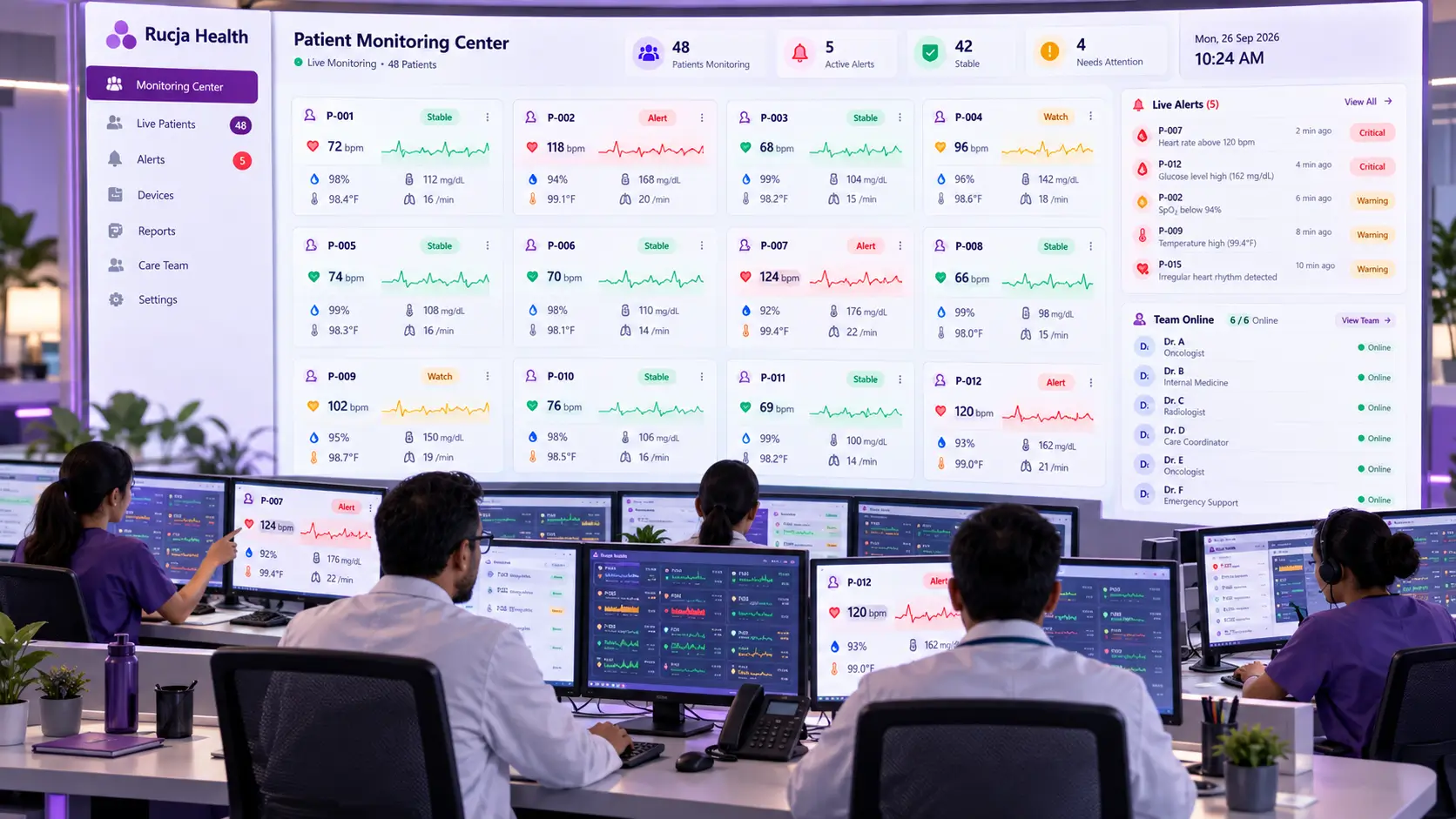
Every reading goes to our monitoring center, where doctors and nurses work in shifts and watch your heart rate, ECG and glucose day and night.
If your rhythm goes irregular or your pulse climbs too high, it shows up on the board as it happens.
The team sees the spike after lunch and the dip overnight, not one fasting number every few months.
Critical alerts go to the top of the list. The doctor on shift picks them up and calls you if something needs checking.
The checks your doctor would run in clinic, taken at home through the day. Each one reaches your care team as soon as it's taken.
Your pulse streams in while you rest, walk and sleep. A rate that runs too fast or too slow is flagged to your doctor straight away.
A fever reaches your doctor the moment it starts.
Watched around the clock. A dip triggers an alert.
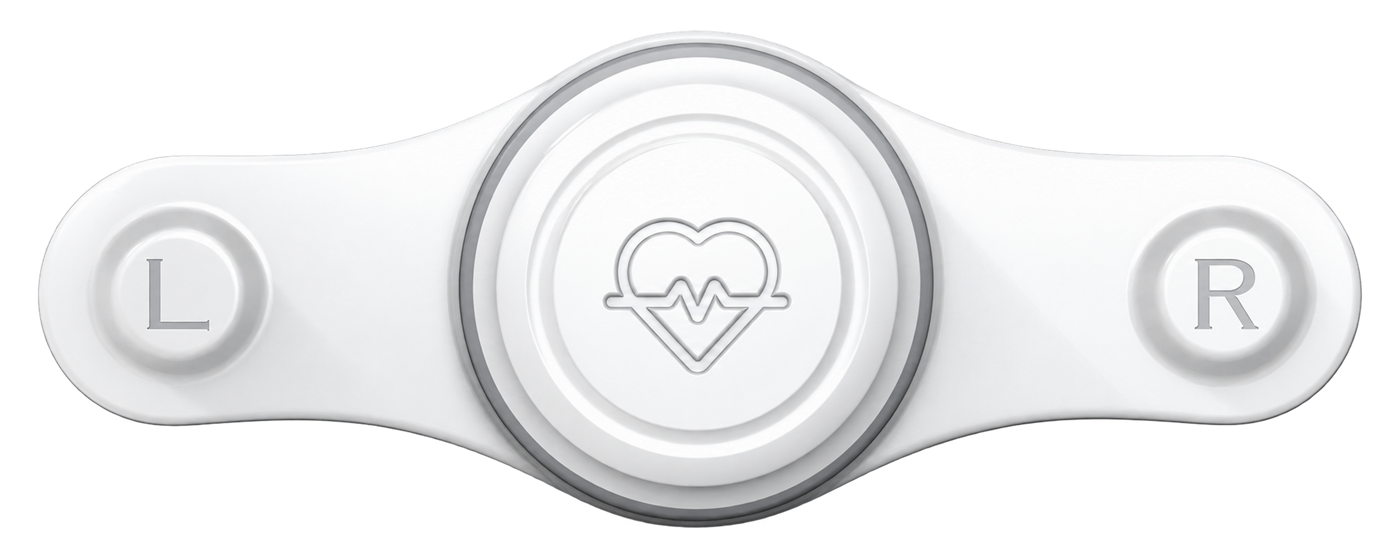
A small patch on your chest records every heartbeat for up to 100 hours. No wires, no clips, nothing to plug in.
Four days of recording, so a rhythm change that comes and goes isn't missed.
It sticks to your chest with a soft pad and you carry on with your day.
Sealed against water, so you don't have to take it off to wash.
Readings sync to your phone. If Bluetooth drops, the patch keeps recording and catches up later.
If one of these sounds like you or someone you look after, Rucja was built for exactly this.
The weeks after a heart attack, stent or bypass are when rhythm changes matter most. They are also when you are furthest from a monitor.
Most readmissions happen in the first month home. A rising temperature or falling oxygen is usually the first sign, days before you feel unwell.
A reading every three months tells your doctor very little. A reading every day shows them what your medication is actually doing.
If you live in another city or another country, you no longer have to ask "are you taking your readings?" You can just look.
Your home readings, lab reports and care plan all sit in one record. A doctor reviews it and gets in touch when something needs a closer look.
When a reading moves outside your safe range, you and your care team are told at the same time. They follow up with you, usually before you've noticed anything is wrong.
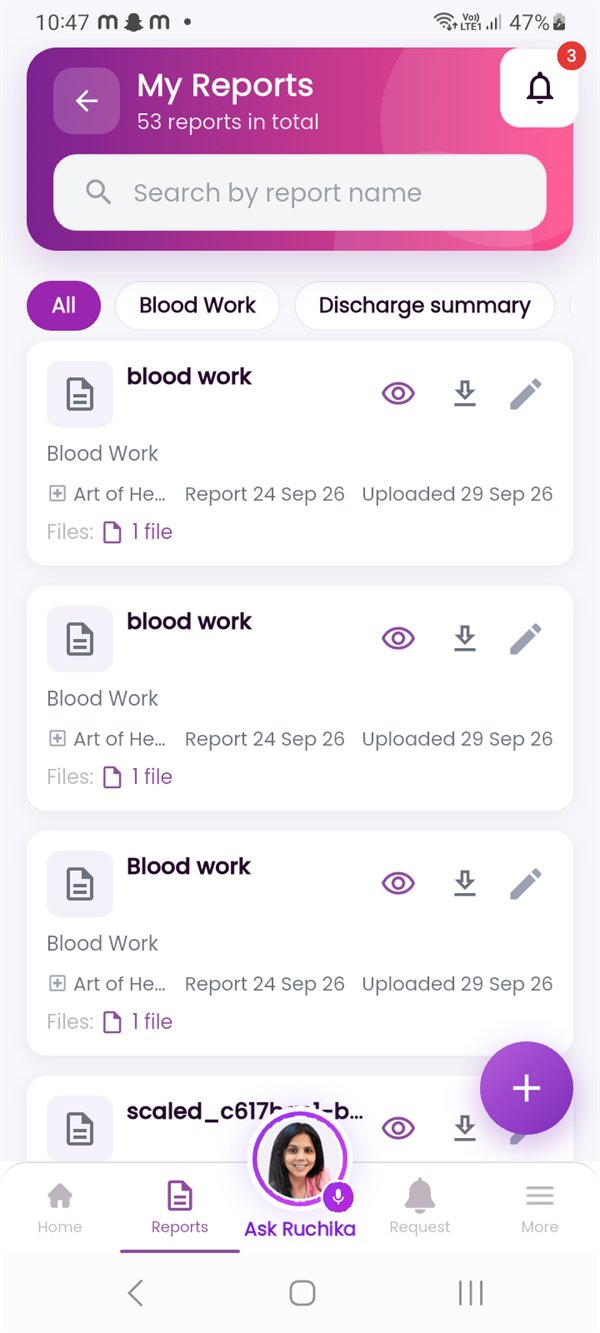
Upload a lab report as a PDF or a photo. Rucja reads each value, plots it against your earlier results and your treatment dates, and explains anything out of range in plain words.
Your doctor sets your medicines, readings and follow-ups, and they appear on your calendar with reminders. When the plan changes, your app updates the same day.
Tap the mic and ask out loud, even at 11 at night. Ruchika answers in speech, using your own reports and vitals, and passes anything serious to your doctor.
Prefer typing? Message Ruchika about a result or a reading and she answers in plain words. She can also set a reminder for your next test.
Your devices work the same in any city. Readings reach your care team from anywhere with a phone signal, and family abroad can follow along.
One account, one record. Get it from the App Store or Google Play, or open it in a browser if you're checking on a parent from abroad.
Face ID sign-in, alerts on the lock screen, and the 24/7 call button one tap from your home screen.
Download on the App StoreBuilt for the phones people actually carry, on the connections they actually have.
Get it on Google PlayOpen it on a laptop, a desktop or a borrowed computer. Useful when a family member needs to look at a report on a bigger screen.
lock healthreport.rucja.io arrow_outwardSign in on the phone, carry on in the browser. It's the same record either way.
The people you invite can follow along from another city or another country.
Designed to keep working on ordinary mobile data, not just fast home wifi.
New features land without anyone having to be talked through an update.
You don't need to be good with technology. Our team walks you through each step on a call, and a family member can join.
Download the app and sign up. On your first call we set up your care plan with you, so it's there the next time you open the app.
Connect only the devices your doctor asks for over Bluetooth. Each one pairs in a few taps, and you can add more later.
Readings sync on their own and the app reminds you when something is due. Your team gets in touch if anything changes.
Stuck on a step? Our setup team stays on the call until everything works.
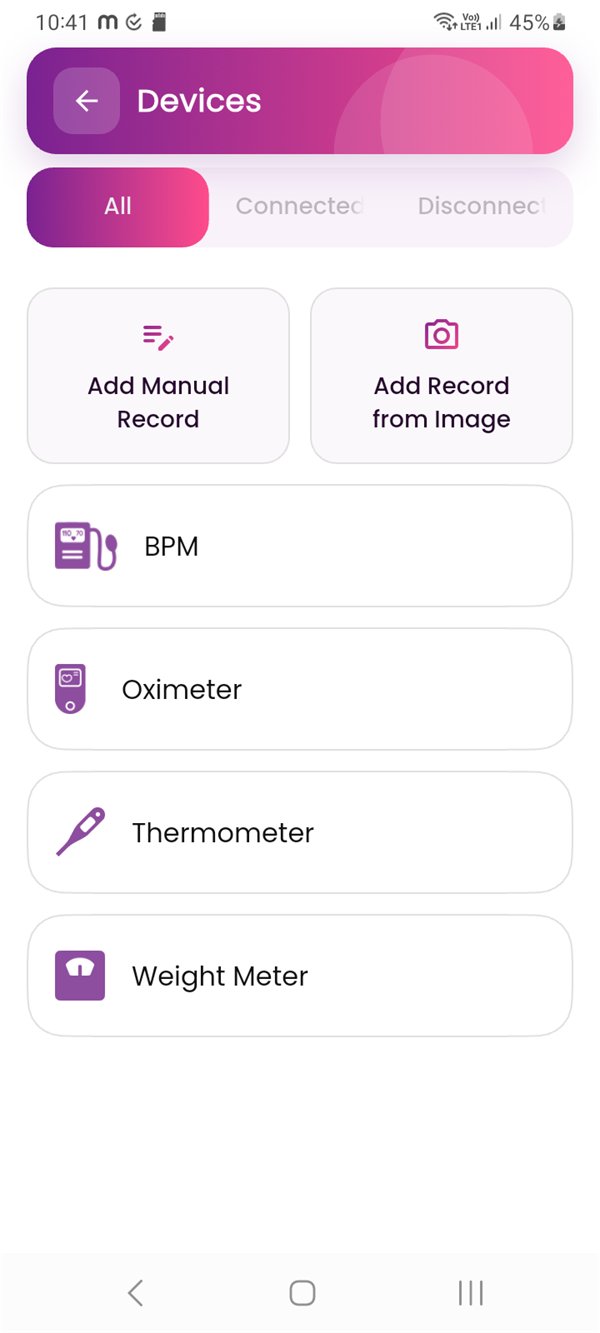
The devices pair to your phone over Bluetooth and send readings on their own. You can also photograph a reading or type it in.
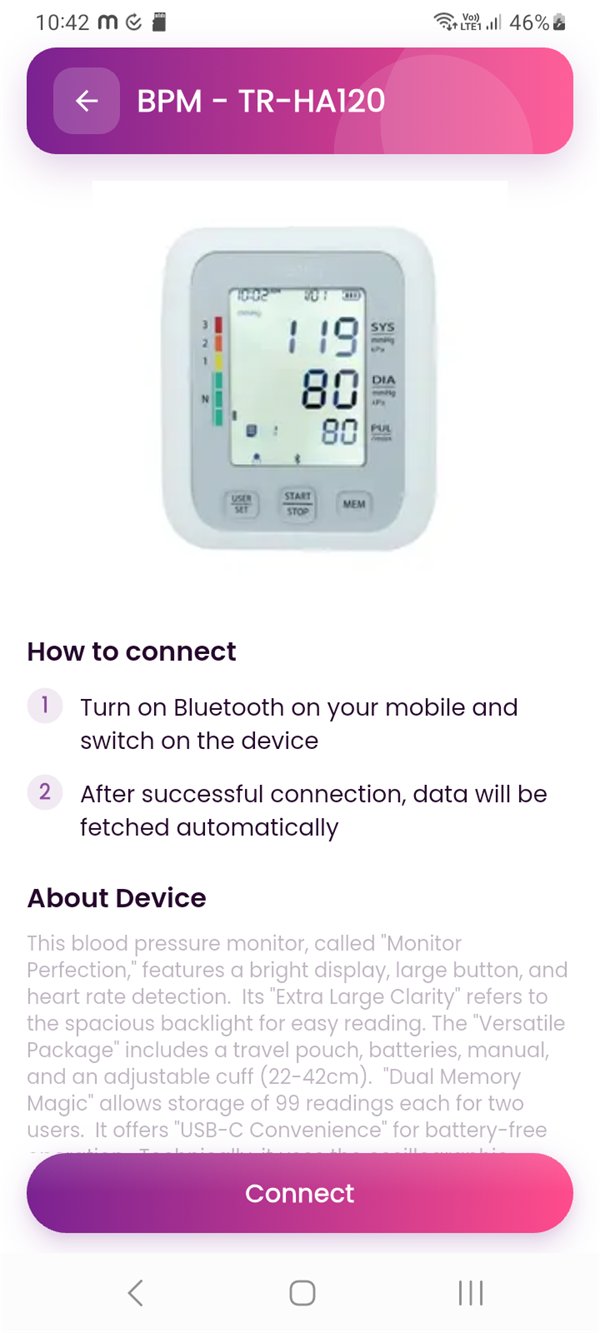
Upper-arm cuff. One button, and the reading sends itself.
Fingertip oxygen and pulse in about fifteen seconds.
Often the earliest sign of an infection after surgery.
Sudden weight gain is how fluid retention shows up first.
Pair once. After that the reading arrives on its own.
Photograph the number on any meter you already own.
Type it in, or say it out loud. There's a mic on every screen.
Readings are only half of it. You can also tell us how you slept, what hurts and what's worrying you, and your care team reads all of it.
A microphone on every screen, so a symptom gets logged even when a keyboard is the last thing you want.
Today's plan on the home screen. On days with nothing scheduled it says so, because rest is part of the plan.
View and download your latest invoice without chasing anyone for it.
Knowledge written for your condition, plus announcements from the team treating you.
There are two ways help starts. One of them is you calling us. The other doesn't need you at all.
The 24/7 call button sits at the top of your home screen, so nobody has to go hunting for it in a bad moment. It puts you through to the people treating you, at 3am just as easily as at 3pm.
The phone icon at the top of your home screen. No menus, no forms.
A member of your care team picks up. They already have your history open, so it's nothing like a general helpline. Past calls stay listed under My calls.
For anything that can wait, open a request and chat with your care team in real time instead.
Most deterioration is quiet. You feel fine, so you don't call. This is the sequence that runs without you.
Every value is checked against the range your own doctor set for you. Out of range, and it stops being a number in an app and becomes a ticket on a monitoring desk.
Someone reviews the trend, not the single reading, and phones to check how you feel. If you don't answer, they call your registered family contact.
The on-call doctor looks at your full record, not just tonight's reading. Then they adjust something, arrange a follow-up, or tell you to come in.
We help arrange transport, send your recent readings ahead so the hospital team isn't starting blind, and call the family members you listed.
The 24/7 call puts you through to your care team, who already know your case. It is not an ambulance dispatch line. If someone collapses, has chest pain or cannot breathe, call emergency services first and your care team second, so they are joining a rescue that has already started.
We hold some of the most personal information there is. Here is exactly what we do with it, in plain words.
The app has an AI Data Sharing control. You decide what the AI features are allowed to see, and you can turn it off.
The clinicians treating you, and the family members you name. Every time a record is opened, it is logged and you can see it.
Not to insurers, not to employers, not to advertisers. We are paid by you, which is the only reason we need.
Export your full history whenever you want. Close your account and we delete it. We will tell you exactly what is removed and when.
Many home monitoring services rely on a single patch or band. Here's what you get with Rucja.
| What's covered | Rucja | Typical wearable-only monitoring |
|---|---|---|
| Temperature, heart rate, oxygen | check_circle | check_circle |
| Blood pressure from a cuff | check_circle | Usually not |
| Blood glucose | check_circle | Usually not |
| Weight from a smart scale | check_circle | Usually not |
| Lab reports on the same timeline as your vitals | check_circle | Usually not |
| AI answers based on your own record | check_circle | Usually not |
| Voice notes to your care team | check_circle | Usually not |
| Medicine and appointment reminders | check_circle | Sometimes |
| Bills and payments in the same app | check_circle | Usually not |
No consultation charges hidden behind the plan, and nothing to buy up front. Cancel when you no longer need monitoring.
For managing a long-term condition like diabetes or high blood pressure.
Round-the-clock cover for recovery at home and anyone with a heart condition.
The first weeks after surgery or a cardiac event, when readmission risk is highest.
A refundable deposit of ₹5,000 covers the kit. Returned in working order, you get it back.
Stop any month. Recovery ends, and so should the bill.
No per-call charge for the consultations your plan covers.
Some post-discharge programs are reimbursable. We'll help you check yours.
Prices shown exclude GST. Devices remain the property of Rucja Health.
What families remember is rarely the app. It's the phone ringing at the right moment.
"Eleven days after my father's bypass his temperature started climbing in the evenings. He felt fine and would never have called anyone. The nurse rang on the second evening. It was an early wound infection, and it was treated with tablets at home."
"I live in Dubai and my mother lives alone in Pune. I used to call twice a day and ask questions she found irritating. Now I open the app, see her readings, and we talk about other things."
"My sugar readings used to be a page of numbers I showed my doctor every three months. Now he can see what happens after lunch, and he changed my evening dose because of it. My HbA1c came down without any new medicine."
We watched our own families come home from hospital with a bag of medicines, a follow-up date and nobody watching in between. So we built the thing we wanted them to have.
Rucja watches and alerts. Treatment decisions stay with your doctor.
Encrypted, visible only to you and your care team, with every access logged.
If a value is out of range, we explain it the way you'd explain it yourself.
You hear from us when a reading needs attention, and never for a normal number.
Short, practical pieces from our care team on recovery, readings and looking after someone you love.
Which readings matter most in the first month, what a normal recovery looks like, and the numbers that mean you should call.
A fasting reading is one moment of the day. A CGM shows you the other twenty-three hours, and that's usually where the answers are.
How to stay on top of a parent's readings without turning every phone call into a check-up.
Something else on your mind? Write to info@rucja.io and we'll reply within a day.
Only the ones your care plan needs. Rucja works with Bluetooth thermometers, BP monitors, heart rate monitors, pulse oximeters, glucose meters and scales. We'll tell you which models work and help you pair them.
You and the care team your account is linked to. Your data is encrypted at rest and in transit, and every time someone opens your record it's logged. You can share a read-only link with anyone else you choose.
You get a notification, and your care team is alerted at the same time so they can follow up. Rucja is not an emergency service. If you feel very unwell, call your local emergency number straight away.
Yes. Readings sync over your phone's internet connection, so your care team sees them wherever you are.
Yes. Once your devices are paired, readings sync on their own. Our setup team will pair them with you over a call, and a family member can help too.
For yourself or someone in your family. We'll call you to talk through the options.
Our care team
is ready to help
Our team will reach you soon.