
boltIn short
- A patch records for up to 100 hours, so it can catch rhythm changes that come and go.
- You can sleep, work and take short showers with it on.
- If you feel something, note the time. It helps your doctor match it to the recording.
An ECG patch records your heartbeat continuously while you get on with life. If your doctor has suggested one, here's what the four days are actually like.
Why a patch and not a normal ECG
An ECG in a clinic records your heart for a few seconds. That's fine for problems that are always there. Some rhythm problems come and go, and may not show up in those few seconds. A patch records for up to 100 hours, which gives it a much better chance of catching them.
Putting it on
- Clean, dry skinWash and dry your chest. Don't use lotion or oil, and shave the area if it's hairy.
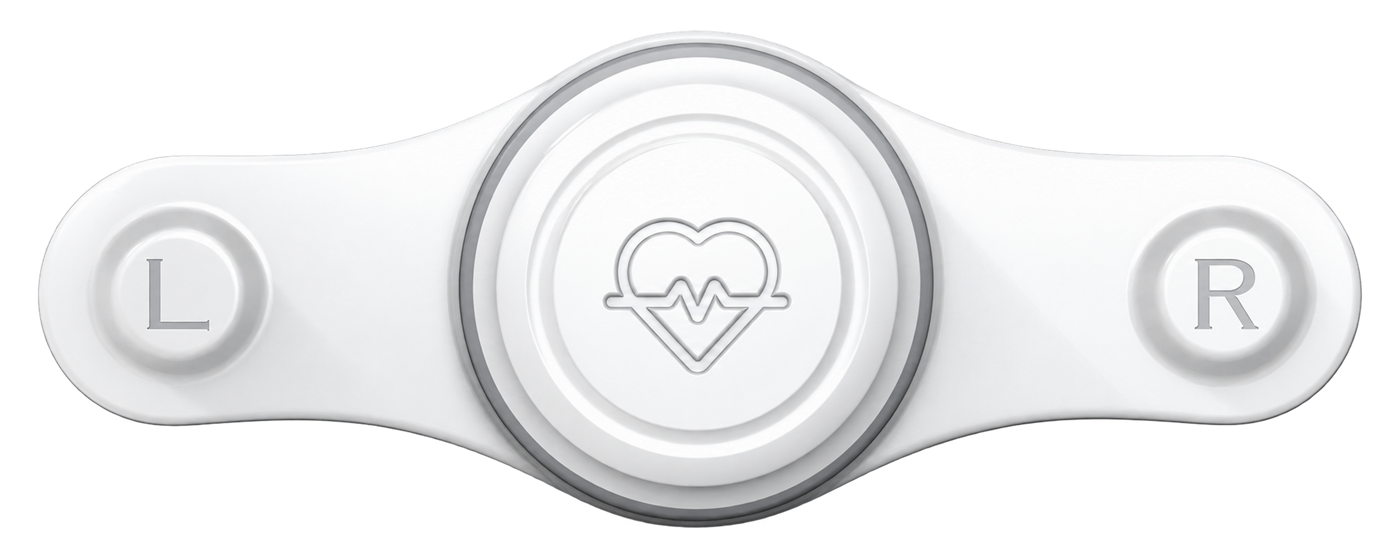
- Stick it where shownThe pads are marked L and R. Our setup team walks you through the position on a call.
- Press and holdPress firmly for about 30 seconds so the pads grip properly.
Living with it
Washing
Short showers are fine. Avoid baths, swimming and saunas while you're wearing it.
Sleeping
Sleep as you normally do. Most people stop noticing it after the first night.
Moving
Walking and everyday activity are fine. Very heavy sweating can loosen the pads.
Your skin
A little itching is common. If the skin gets very red or sore, take the patch off and tell your care team.
If you feel something
If you get palpitations, dizziness or a flutter in your chest, note the time and what you were doing. Your doctor can then look at that exact moment in the recording.
Afterwards
When the recording is done, you peel the patch off. Your care team goes through the recording and tells you what they found, and whether anything needs to change.